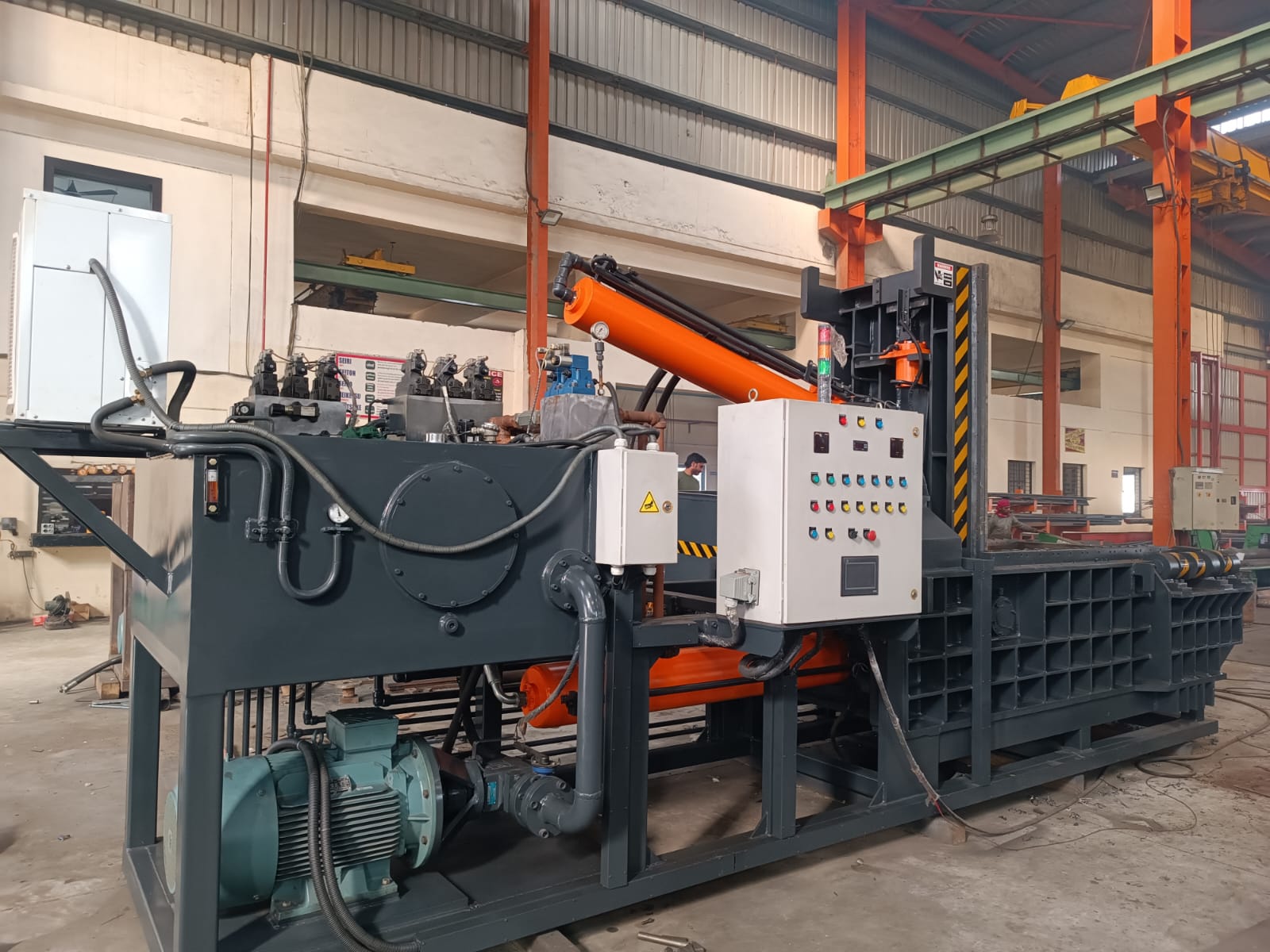
Triple Compression Scrap Baling Press – Applications, Maintenance and Industrial Benefits
Explore triple compression scrap baling presses for metal recycling. Learn about hydraulic pressure, compact bales, key features, and industrial uses.

Krishna Kumar
Industrial waste management is an important part of manufacturing and recycling activities. Many factories produce metal scrap during regular production. This waste may include steel pieces, metal sheets, and leftover industrial materials.
Storing loose scrap can create problems because it takes up valuable space and needs regular handling.
A Triple Compression Scrap Baling Press Machine helps compress suitable metal waste into compact bales.
Understanding the machine's applications, maintenance needs, and operating benefits can help businesses use it effectively.
Industrial Applications of Triple Compression Machines
Triple compression baling presses are used in different industrial sectors.
Scrap recycling yards use these machines to prepare metal waste for storage and transport.
Metal fabrication companies can use them to manage production offcuts.
Automobile component manufacturers may also need scrap baling equipment to handle suitable leftover materials.
Steel processing businesses and other industrial facilities can benefit from organised waste handling.
However, every machine has limits on the types and sizes of materials it can process.
How the Compression Process Works
A triple compression machine uses a hydraulic system to press material from three directions.
Loose scrap is loaded into the approved compression chamber.
The machine then applies pressure in stages to reduce the material's volume.
A Three Direction Hydraulic Baling Press forms compact bales that can be removed using the approved ejection system.
Different models may offer different operating controls and bale sizes.
The machine should always be used according to its rated capacity.
Importance of Hydraulic System Maintenance
The hydraulic system is an important part of the baling machine.
It provides the force needed for the compression process.
Hydraulic cylinders, hoses, seals, pumps, and oil systems require regular checks.
Maintenance workers should look for visible oil leakage, damaged components, and unusual operating conditions.
Hydraulic oil should be maintained according to the manufacturer's instructions.
Only trained maintenance personnel should repair the system.
The machine must be properly isolated and stored hydraulic pressure safely released before servicing.
Cleaning and General Machine Care
Daily cleaning can help maintain the condition of industrial equipment.
Loose metal pieces and waste should not be allowed to collect in unsafe areas around the machine.
Operators should follow the manufacturer's cleaning instructions for the compression chamber and nearby surfaces.
Moving parts and approved lubrication points may need regular attention.
Electrical panels should be protected from unsuitable cleaning methods.
Regular inspection helps identify problems that require maintenance before further operation.
Safe Operation of Baling Equipment
Hydraulic baling machines use strong compression forces.
Workers must understand the operating procedure before using the equipment.
Hands and tools should remain outside the compression area during operation.
Machine guards and safety controls should never be bypassed.
Operators should also check that suitable materials are loaded correctly.
Only authorised personnel should clear machine jams or perform repairs after the equipment has been made safe.
How Baling Supports Industrial Efficiency
A Heavy Duty Scrap Baling Press Machine can help businesses organise large quantities of suitable metal waste.
Compact bales usually occupy less space than loose scrap.
This may make storage arrangements and transportation planning easier.
Baling can also reduce some manual handling activities.
However, actual productivity depends on machine capacity, loading methods, scrap type, and working conditions.
Businesses should measure their own results rather than relying on general performance claims.
Choosing Reliable Industrial Machinery
When buying a baling press, businesses should check the manufacturer's product range, technical specifications, and available support.
Rolcon India offers hydraulic triple compression baling machines and other industrial recycling equipment for scrap handling applications.
Buyers can discuss machine capacity, compression requirements, and operating conditions before making a decision.
A suitable model should be selected according to daily processing needs.
Conclusion
Triple compression baling presses are useful machines for industrial metal scrap management.
They help reduce loose scrap into compact bales for easier handling and storage.
Proper maintenance, safe operation, and suitable machine selection are important for reliable performance.
With a well-planned scrap handling process, businesses can make better use of their storage space and support more organised recycling activities.
About the Author
Krishna Kumar
No bio available