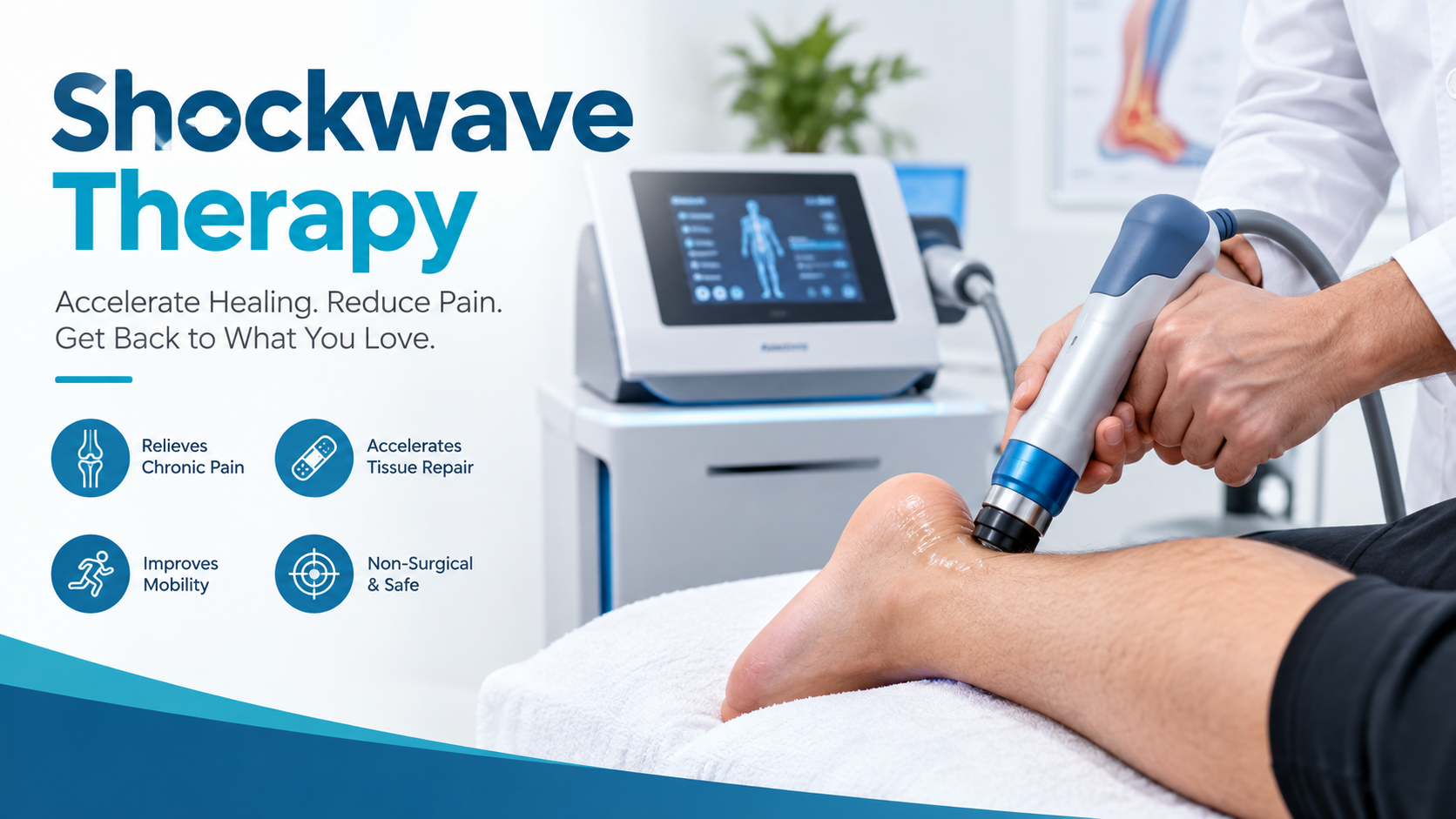
Shockwave Therapy in Pakistan
Shockwave therapy is a non-invasive treatment that uses controlled sound waves to stimulate healing, improve blood circulation.

Dot Clinics
Shockwave Therapy: Benefits, Uses, Procedure, Safety, and Erectile Dysfunction Treatment
Shockwave therapy is a non-invasive treatment that uses controlled sound waves to stimulate healing, improve blood circulation, and support tissue regeneration. It has been used in several areas of medicine, including musculoskeletal conditions, sports injuries, chronic tendon problems, and, increasingly, sexual health.
One of the areas attracting significant interest is low-intensity shockwave therapy for erectile dysfunction (ED). Unlike high-energy shockwaves used to break kidney stones, low-intensity shockwave therapy uses carefully controlled energy levels with the goal of stimulating biological responses in tissues.
Research suggests that low-intensity shockwave therapy may improve erectile function in some men, particularly those with mild-to-moderate vasculogenic erectile dysfunction. However, evidence is still developing, and it should not be presented as a guaranteed or permanent cure for ED.
What Is Shockwave Therapy?
Shockwave therapy, also called extracorporeal shockwave therapy (ESWT), is a treatment that delivers acoustic waves into targeted areas of the body.
These waves can produce mechanical stimulation within the treated tissue. Depending on the type and intensity of treatment, this stimulation may encourage:
Increased local blood circulation
Tissue repair
Cellular activity
Formation of new blood vessels
Reduction of certain chronic pain processes
Remodeling of damaged tissue
The treatment is performed using a specialized device. A clinician places an applicator against the skin and delivers controlled waves to the treatment area.
Shockwave therapy does not involve surgery, incisions, or injections.
How Does Shockwave Therapy Work?
The biological effects of shockwave therapy depend on the type of device, energy level, treatment area, and treatment protocol.
Generally, acoustic waves create mechanical stimulation in the targeted tissue. This may activate cellular signaling and contribute to tissue-healing processes.
In some applications, shockwave therapy is intended to stimulate circulation and tissue regeneration rather than simply provide temporary symptom relief.
Shockwave Therapy and Blood Circulation
Improved blood flow is particularly relevant when shockwave therapy is used for erectile dysfunction.
An erection depends on adequate blood flow into the erectile tissues of the penis and appropriate trapping of that blood within the erectile chambers. Conditions that affect the blood vessels can therefore contribute to ED.
Low-intensity shockwave therapy has been investigated as a way of stimulating vascular and tissue responses that may improve erectile function.
However, research has produced varying results, and not every person with ED will respond in the same way.
What Conditions Can Shockwave Therapy Treat?
Shockwave therapy has been investigated or used clinically for several conditions.
Depending on the specific type of shockwave treatment, applications may include:
Tendinopathy
Plantar fasciitis
Certain chronic tendon injuries
Sports-related injuries
Musculoskeletal pain
Some soft-tissue conditions
Erectile dysfunction
It is important to understand that shockwave therapy is not one single treatment protocol. Different conditions require different devices, energy levels, treatment schedules, and treatment targets.
The treatment used for erectile dysfunction, for example, is generally low-intensity shockwave therapy, which is different from high-energy shockwave procedures used for stone fragmentation.
Low-Intensity Shockwave Therapy for Erectile Dysfunction
Erectile dysfunction is the inability to achieve or maintain an erection sufficient for satisfactory sexual activity.
ED can have many causes, including:
Reduced blood circulation
Diabetes
High blood pressure
Cardiovascular disease
Obesity
Smoking
Hormonal problems
Certain medications
Nerve disorders
Pelvic surgery or injury
Psychological and relationship factors
Because blood-vessel health is an important component of erectile function, researchers have studied whether low-intensity shockwave therapy can improve vascular function in men with ED.
The treatment is sometimes referred to as:
LiSWT
Li-ESWT
Low-intensity extracorporeal shockwave therapy
Low-intensity shockwave therapy for ED
How Can Shockwave Therapy Help Erectile Dysfunction?
The proposed mechanism is different from medications such as sildenafil or tadalafil.
PDE5 inhibitor medications primarily help the body's normal erection signaling pathway work more effectively. Low-intensity shockwave therapy, by contrast, is intended to produce a biological response in the penile tissues.
Researchers have proposed several possible mechanisms, including:
1. Supporting Blood Vessel Formation
One proposed effect is stimulation of processes involved in the formation or remodeling of small blood vessels.
This is potentially important because inadequate penile blood flow is a major contributor to many cases of ED.
2. Improving Local Blood Flow
Shockwave treatment may affect vascular function and circulation in the treated tissue.
3. Stimulating Tissue Repair
Mechanical stimulation from acoustic waves may activate cellular responses associated with tissue repair and regeneration.
4. Supporting Erectile Tissue Function
By targeting the penile tissues rather than simply producing a temporary erection, the therapy is being investigated as a potentially restorative approach to certain forms of ED.
However, these mechanisms are still being studied, and proposed biological effects should not be interpreted as proof that every patient will experience a clinically meaningful improvement.
What Does the Research Say About Shockwave Therapy for ED?
The evidence surrounding low-intensity shockwave therapy for ED has changed as more randomized trials and systematic reviews have become available.
Earlier meta-analyses generally reported improvements in erectile-function scores, including the International Index of Erectile Function (IIEF). For example, a 2019 systematic review of randomized controlled trials reported improvements in erectile-function outcomes, particularly among men with vasculogenic ED.
More recent evidence provides a more cautious picture.
A 2025 Cochrane review included 21 randomized controlled trials involving 1,357 men. It found that low-intensity shockwave therapy may produce a small short-term improvement in erectile function compared with sham treatment, but the certainty of evidence was low and the clinical importance of the improvement remained uncertain.
A 2026 systematic review and meta-analysis also reported improvements in IIEF-5 and IIEF-EF scores but did not find significant differences for several other outcomes, including erection hardness and certain penile Doppler parameters. The authors concluded that the clinical relevance may be limited for many patients and that the evidence does not currently support routine inclusion of LiSWT in ED treatment algorithms.
This means that shockwave therapy for ED is a promising but still evolving treatment option, rather than a guaranteed cure.
Who May Be a Candidate for Shockwave Therapy for ED?
Patient selection is important.
The European Association of Urology currently describes low-intensity shockwave treatment as an option with a weak recommendation for selected men, including those with mild vasculogenic ED, men who are not suitable for or do not wish to use oral vasoactive therapy, and some men with vasculogenic ED who respond poorly to PDE5 inhibitors.
A doctor may consider factors such as:
Severity of ED
Duration of symptoms
Cardiovascular health
Diabetes status
Blood pressure
Smoking history
Current medications
Hormonal health
Previous ED treatments
Evidence of vascular causes
Overall sexual and medical history
A proper assessment is important before starting treatment.
Who May Not Benefit as Much?
Shockwave therapy may be less suitable when ED is primarily caused by factors that cannot be addressed through improving penile blood flow.
For example, ED may involve:
Severe vascular disease
Significant nerve damage
Major hormonal abnormalities
Certain medication effects
Psychological factors
Complications following major pelvic surgery
This does not necessarily mean that someone with these conditions cannot receive treatment. Rather, it emphasizes why identifying the underlying cause of ED is important.
Shockwave Therapy Procedure for ED
The procedure is generally performed without anesthesia and does not require surgery.
A typical session may involve the following steps:
Step 1: Medical Assessment
The clinician evaluates the patient's erectile difficulties and medical history.
Depending on the situation, assessment may include blood pressure measurement, blood tests, medication review, and evaluation of cardiovascular or hormonal risk factors.
Step 2: Treatment Area Preparation
The patient is positioned comfortably, and the treatment area is identified.
The device applicator is placed against the skin of the penis.
Step 3: Application of Shockwaves
The clinician delivers controlled low-intensity acoustic waves to selected areas of the penis.
The exact treatment parameters vary between devices and protocols.
Step 4: Completion of the Session
After the prescribed number of pulses has been delivered, the device is removed.
There are generally no incisions or injections, and patients can usually return to normal activities soon afterward.
How Many Shockwave Therapy Sessions Are Needed for ED?
There is no single universally accepted treatment schedule.
Research studies have used different:
Energy levels
Number of pulses
Treatment frequencies
Treatment locations
Total number of sessions
Follow-up periods
Some studies have used treatment schedules extending over several weeks.
Because protocols vary significantly, the number of sessions should be determined by the treating clinician rather than assuming that a particular number of sessions will work for everyone.
This variation in treatment protocols is also one reason it is difficult to compare results between different studies.
Does Shockwave Therapy Hurt?
Low-intensity shockwave therapy is generally considered well tolerated.
Some people may experience:
Mild discomfort
Tingling
Temporary redness
Minor sensitivity
Mild soreness
The sensation can vary depending on the treatment area, device, energy level, and individual sensitivity.
Patients should tell the clinician if treatment becomes uncomfortable so that the settings can be evaluated.
Is Shockwave Therapy Safe?
Current research generally suggests that low-intensity shockwave therapy is well tolerated, with relatively few treatment-related adverse effects reported in clinical studies.
However, "non-invasive" does not mean that every treatment is appropriate for every person.
Before treatment, patients should discuss:
Existing medical conditions
Medications
Blood-thinning medications
Previous penile surgery
Significant vascular disease
Bleeding disorders
Other urological conditions
A qualified medical professional should determine whether treatment is appropriate.
Shockwave Therapy vs ED Medication
Shockwave therapy and ED medications work differently.
FeatureShockwave TherapyED MedicationMain approachPhysical/acoustic stimulationMedication-basedSurgery requiredNoNoInjections requiredUsually noUsually noIntended effectPotential tissue/vascular effectsFacilitates erection responseOn-demand useGenerally noMany medications are used before sexual activityEvidence for EDStill evolvingEstablished treatment optionSuitable for everyoneNoNo
Common oral ED medications include PDE5 inhibitors such as sildenafil and tadalafil. These medications are established treatments, but they are not appropriate for everyone, particularly people taking certain nitrate medications.
A doctor should evaluate medication safety before prescribing ED medication.
Shockwave Therapy vs PRP for ED
Shockwave therapy is sometimes compared with platelet-rich plasma (PRP) therapy.
Both have been promoted as regenerative approaches, but they are different procedures.
Shockwave therapy uses acoustic waves delivered externally.
PRP therapy involves collecting a patient's blood, processing it to concentrate platelets, and injecting the preparation into the treatment area.
Evidence for both regenerative approaches in ED continues to develop, and neither should automatically be described as a guaranteed cure.
Patients should ask their healthcare provider about the evidence, potential risks, expected outcomes, and alternatives before choosing a regenerative treatment.
Benefits of Shockwave Therapy
Potential benefits depend on the medical condition being treated.
For selected patients undergoing low-intensity shockwave therapy for ED, potential advantages may include:
Non-surgical treatment
No incision
Usually no anesthesia
Short treatment sessions
Minimal interruption to daily activities
Potential improvement in erectile-function measures
May be considered alongside other ED treatments in selected cases
However, potential benefits should be balanced against the uncertainty in the current evidence.
Limitations of Shockwave Therapy for ED
Shockwave therapy should not be marketed as a guaranteed permanent cure.
Important limitations include:
Results Vary
Some patients improve substantially, while others experience little or no meaningful change.
Protocols Differ
Clinical studies have used different treatment devices and protocols, making results difficult to compare.
Long-Term Evidence Is Still Developing
Although some studies report benefits lasting several months or longer, the durability of benefit remains an area of ongoing research.
Not All ED Is Caused by Blood-Flow Problems
ED can be psychological, neurological, hormonal, medication-related, vascular, or mixed.
Improving blood flow alone cannot address every cause.
When Can Results Be Expected?
Shockwave therapy is different from an on-demand ED medication.
A medication such as sildenafil may work around the time it is taken, whereas shockwave therapy is intended to produce biological changes over time.
Therefore, patients should not necessarily expect an immediate erection after a treatment session.
If improvement occurs, it may develop gradually during or after a course of treatment.
The timing and degree of improvement vary between individuals.
Can Shockwave Therapy Permanently Cure ED?
There is currently not enough evidence to describe shockwave therapy as a permanent cure for erectile dysfunction.
The goal is to improve erectile function in appropriately selected patients, particularly when vascular factors are involved.
A patient's long-term outcome will also depend on underlying health.
For example, uncontrolled diabetes, smoking, obesity, high blood pressure, and cardiovascular disease can continue to affect erectile function even after treatment.
Lifestyle Changes and ED
Shockwave therapy should not be considered a substitute for addressing cardiovascular and metabolic health.
Lifestyle measures that may support erectile and overall health include:
Regular physical activity
Maintaining a healthy body weight
Stopping smoking
Limiting excessive alcohol consumption
Managing blood pressure
Managing diabetes
Maintaining healthy cholesterol levels
Getting adequate sleep
Managing stress
Reviewing medications with a doctor when appropriate
Because ED can sometimes be an early indicator of cardiovascular disease, persistent erectile problems deserve medical evaluation rather than being treated solely as a sexual issue.
Why ED Should Be Medically Evaluated
Erectile dysfunction is common, but it should not simply be dismissed as a normal part of aging.
The condition can be associated with vascular and metabolic health problems.
A medical evaluation can help identify potentially treatable causes and determine which treatment options are appropriate.
The assessment may include:
Medical history
Sexual history
Physical examination
Blood pressure measurement
Blood glucose testing
Lipid testing
Hormonal evaluation when indicated
Medication review
Assessment of cardiovascular risk
Depending on the case, a doctor may also recommend additional testing.
Is Shockwave Therapy FDA Approved for ED?
Patients should be cautious about claims that a particular shockwave device is "FDA approved for treating erectile dysfunction."
The U.S. AUA guideline has historically considered low-intensity extracorporeal shockwave therapy for ED investigational, while European guidance has become more permissive for selected men with mild vasculogenic ED.
Regulatory status can also differ by country and by specific device.
Therefore, patients should ask the provider:
Which device is being used?
What is the device approved or cleared for?
Is it specifically authorized for ED in the country where treatment is being provided?
What evidence supports the particular protocol?
What results should realistically be expected?
Frequently Asked Questions About Shockwave Therapy
What is shockwave therapy?
Shockwave therapy is a non-invasive treatment that uses controlled acoustic waves to stimulate targeted tissues. It has applications in several medical fields and is being studied for erectile dysfunction.
Is shockwave therapy used for erectile dysfunction?
Yes. Low-intensity shockwave therapy has been studied for ED, particularly vasculogenic ED. Some studies show improvement in erectile-function scores, although recent evidence indicates that the overall certainty and clinical significance of the benefit remain uncertain.
Does shockwave therapy work for everyone with ED?
No. ED has multiple causes, and treatment response varies. Men with mild vasculogenic ED may be among the groups considered for this therapy under current European guidance.
Is shockwave therapy painful?
Low-intensity treatment is generally well tolerated, although some patients may experience mild discomfort, tingling, or temporary sensitivity.
How long does a shockwave therapy session take?
Treatment sessions are generally relatively short, but the exact duration depends on the device, treatment area, and protocol.
How many sessions are required?
There is no universally accepted number of sessions. Research has used different treatment schedules, so the clinician should determine the protocol based on the patient's condition and the device being used.
Can shockwave therapy replace Viagra?
Not necessarily. Shockwave therapy and PDE5 inhibitor medications work differently. A doctor can determine whether shockwave therapy, medication, a combination approach, or another treatment is appropriate.
Is shockwave therapy a permanent cure for ED?
There is not enough evidence to describe it as a guaranteed permanent cure. Research is continuing to determine how durable the benefits are.
Are there side effects?
Reported adverse effects are generally mild, but side effects can vary depending on treatment parameters and the individual. Medical assessment is recommended before treatment.
Can younger men have ED?
Yes. Erectile dysfunction can affect men of different ages. Causes can include vascular problems, medications, hormonal issues, psychological factors, neurological problems, and lifestyle-related risk factors.
Should someone with ED see a doctor before shockwave therapy?
Yes. Determining the cause of ED is important because different causes require different treatments.
Final Thoughts
Shockwave therapy is an interesting non-invasive treatment technology with applications ranging from certain musculoskeletal conditions to sexual medicine.
For erectile dysfunction, low-intensity shockwave therapy is being investigated as a potentially regenerative approach, particularly for men whose ED has a vascular component. Earlier research reported improvements in erectile-function measurements, while newer evidence has emphasized that the size and clinical importance of the benefit remain uncertain.
Current European guidance allows low-intensity shockwave therapy to be considered in selected men with mild vasculogenic ED, using a weak recommendation.
The most appropriate treatment depends on the underlying cause and severity of ED, overall health, medications, cardiovascular risk, and individual treatment preferences.
Anyone considering shockwave therapy should receive an evaluation from a qualified healthcare professional and should be given realistic information about expected benefits, limitations, alternatives, costs, and potential risks.
About the Author
Dot Clinics
No bio available