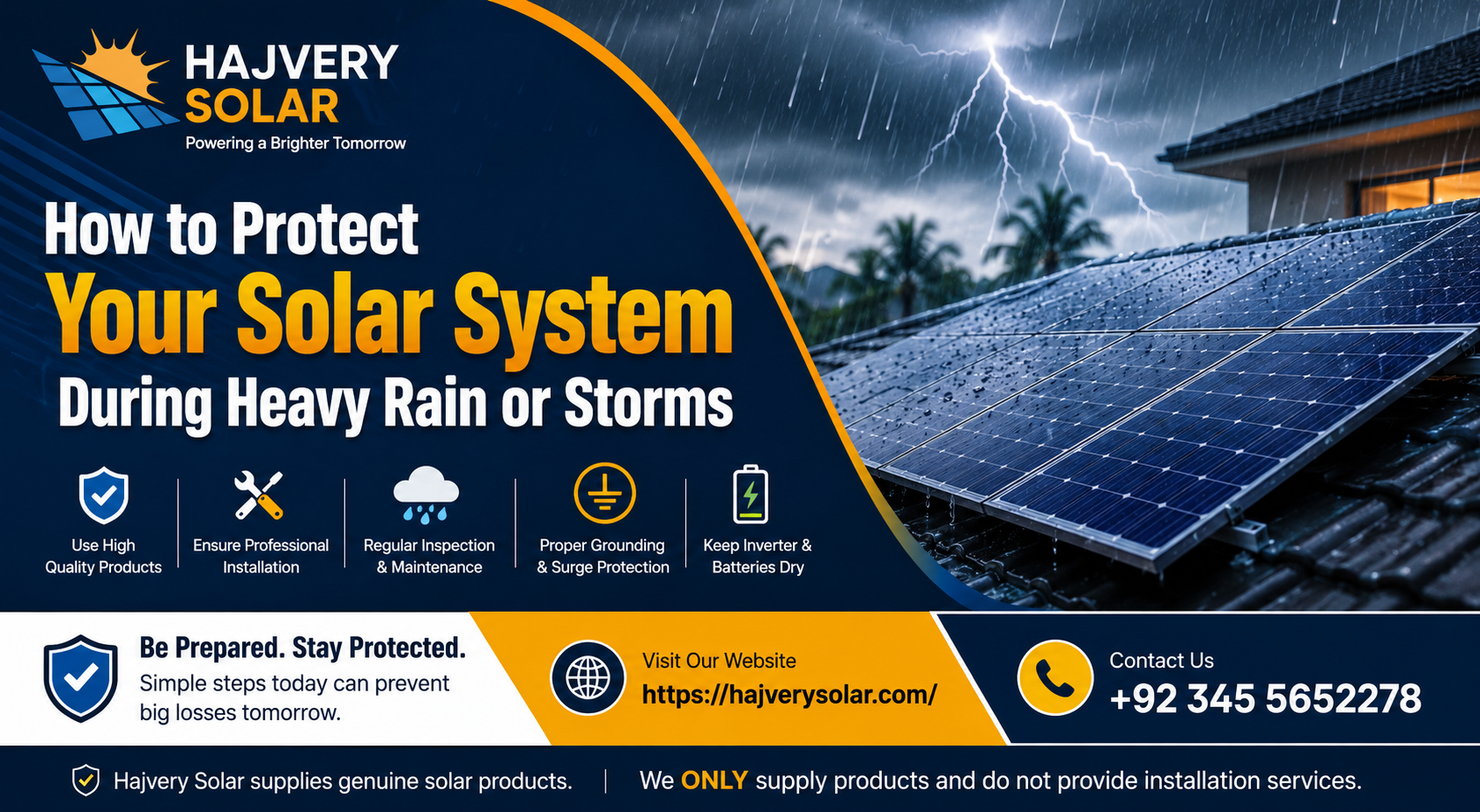
How to Protect Your Solar System During Heavy Rain or Storms
Learn how to protect your solar system during heavy rain and storms. Hajvery Solar supplies genuine solar products and does not provide installation servic

George Brown
Pakistan experiences heavy monsoon rains, thunderstorms, and strong winds every year. While modern solar systems are built to withstand various weather conditions, severe storms can still pose risks if proper precautions are not taken. Protecting your solar system during heavy rain and storms not only helps prevent costly damage but also ensures your system continues generating clean energy efficiently for years.
Whether you own a residential or commercial solar system, understanding how weather affects solar equipment can help you avoid unnecessary repairs and maintain long-term performance.
Hajvery Solar supplies genuine solar panels, hybrid inverters, on-grid inverters, lithium batteries, and other high-quality solar products from leading brands. Hajvery Solar only supplies solar products and does not provide installation services. This guide shares practical tips to help you protect your solar investment during extreme weather.
Can Solar Panels Withstand Heavy Rain?
Yes. High-quality solar panels are specifically designed to withstand rain, hail, moisture, and harsh outdoor environments. Most premium panels are manufactured with tempered glass, corrosion-resistant aluminum frames, and waterproof junction boxes that protect internal components.
Rain itself rarely damages solar panels. In fact, rainfall often helps wash away dust, bird droppings, and dirt, allowing the panels to absorb more sunlight once the weather clears. However, severe storms accompanied by strong winds, flooding, lightning, or falling debris require additional precautions.
Invest in High-Quality Solar Products
The first step in protecting your solar system begins with purchasing reliable equipment.
Premium solar products are manufactured using durable materials and undergo strict quality testing to ensure long-lasting performance under different weather conditions.
Choose products that include:
Tempered anti-reflective glass
Corrosion-resistant aluminum frames
Waterproof connectors
IP65 or IP66-rated inverters
High-quality lithium batteries
Long manufacturer warranties
Buying genuine products from a trusted supplier significantly reduces the chances of weather-related failures.
Ensure Professional Installation
Although Hajvery Solar does not provide installation services, professional installation plays a major role in protecting any solar system.
A qualified installer should:
Secure mounting structures properly
Tighten all bolts and fasteners
Use corrosion-resistant hardware
Install proper grounding
Seal cable entry points
Follow manufacturer installation guidelines
Incorrect installation is one of the leading causes of storm damage, even when high-quality products are used.
Inspect Your Solar System Before the Rainy Season
Routine inspections help identify small problems before they become expensive repairs.
Before heavy rain begins, inspect your system for:
Loose mounting brackets
Cracked solar panels
Rust on metal structures
Damaged wiring
Loose electrical connections
Dirt accumulation
Addressing these issues early helps your solar system remain safe during extreme weather.
Keep Solar Panels Clean
Clean solar panels generate more electricity than dirty ones.
Dust, pollution, bird droppings, and leaves reduce sunlight absorption and decrease efficiency.
Cleaning tips include:
Wash panels with clean water.
Use a soft sponge or microfiber cloth.
Avoid harsh chemicals.
Never use abrasive brushes.
Do not stand or walk on solar panels.
Although rain naturally removes some dirt, periodic cleaning keeps your system operating at peak performance.
Protect Your Solar Inverter
The inverter is the heart of every solar system. It converts solar energy into usable electricity, making it one of the most valuable components.
To protect your inverter:
Install it in a covered location.
Keep it away from direct rain.
Ensure proper airflow.
Prevent water from collecting nearby.
Check for warning lights after storms.
If your inverter shows unusual error messages following heavy rain, contact a qualified technician for inspection.
Keep Lithium Batteries Safe
If your system uses lithium batteries, proper storage is essential.
Protect your batteries by:
Keeping them in a dry location
Avoiding direct contact with water
Maintaining adequate ventilation
Cleaning battery terminals regularly
Preventing exposure to flooding
Quality lithium batteries include advanced safety features, but keeping them dry greatly extends their lifespan.
Improve Drainage Around Your Property
Floodwater can damage electrical equipment even if the solar panels remain unaffected.
Reduce flooding risks by:
Cleaning gutters regularly
Clearing blocked drainage channels
Preventing standing water
Raising battery storage above flood-prone areas
Keeping electrical equipment away from water accumulation
Good drainage protects the entire solar system during heavy rainfall.
Watch for Strong Winds
Storms often bring powerful winds capable of damaging poorly secured solar panels.
After severe weather, inspect for:
Loose panels
Bent mounting rails
Missing bolts
Shifted panel alignment
Visible physical damage
Never inspect rooftop solar panels while strong winds or rain continue. Always wait until weather conditions become safe.
Protect Against Lightning
Lightning does not frequently strike solar panels directly, but nearby strikes can create electrical surges.
Professional installers often recommend:
Proper grounding
Surge protection devices
Lightning protection systems
Electrical disconnect switches
If lightning occurs nearby and your solar equipment behaves unusually, stop using the system until it has been inspected by a qualified technician.
Monitor Your Solar System After a Storm
Once the weather improves, inspect your system carefully.
Check for:
Normal inverter operation
Expected power generation
Physical damage
Water leakage
Loose wiring
Error messages
Many modern inverters include smart monitoring systems that allow users to track performance using mobile applications.
Never Attempt Electrical Repairs Yourself
Storm damage may expose electrical hazards.
Avoid:
Opening the inverter
Touching damaged cables
Repairing electrical connections
Replacing damaged components without professional knowledge
Electrical repairs should always be performed by qualified solar technicians.
Verify Your Insurance Coverage
If your solar system is covered under your property insurance, review your policy before storm season.
Insurance may cover:
Storm damage
Lightning strikes
Hail damage
Falling trees
Fire
Wind damage
Knowing your coverage can help reduce financial losses if severe weather occurs.
Purchase Genuine Solar Equipment
One of the best ways to protect your solar investment is to purchase original products from trusted suppliers.
Counterfeit or low-quality products often fail during harsh weather and typically offer poor warranties.
When buying solar equipment, verify:
Manufacturer certification
Warranty coverage
Product serial numbers
Original packaging
Authorized supplier credentials
Choosing authentic equipment improves reliability, efficiency, and long-term performance.
Common Mistakes to Avoid
Many solar system problems result from preventable mistakes.
Avoid these common errors:
Buying low-quality products
Ignoring regular maintenance
Allowing water to collect near batteries
Delaying repairs after storms
Using damaged cables
Skipping professional inspections
Regular maintenance and quality equipment greatly reduce these risks.
Benefits of Preparing Before Storm Season
Taking preventive measures offers several advantages:
Longer equipment lifespan
Better energy production
Lower maintenance costs
Improved electrical safety
Reduced risk of unexpected failures
Greater return on your solar investment
Preparing before heavy rains is far easier and less expensive than repairing storm damage afterward.
Conclusion
Heavy rain and storms are a natural part of Pakistan's climate, but they do not have to threaten your solar investment. By choosing high-quality solar equipment, scheduling regular inspections, maintaining proper drainage, keeping panels clean, and ensuring installation is completed by qualified professionals, you can significantly reduce the risk of weather-related damage and keep your solar system operating efficiently for many years.
Hajvery Solar is committed to providing customers with genuine, high-performance solar products from leading global brands. From premium solar panels and hybrid inverters to lithium batteries, on-grid inverters, and essential solar accessories, Hajvery Solar supplies reliable products designed to perform in Pakistan's challenging weather conditions. Please note that Hajvery Solar only supplies solar products and does not provide installation services. When you choose Hajvery Solar, you are investing in trusted quality, authentic products, expert product guidance, and long-term value to help power your home or business with confidence.
About the Author
George Brown
No bio available