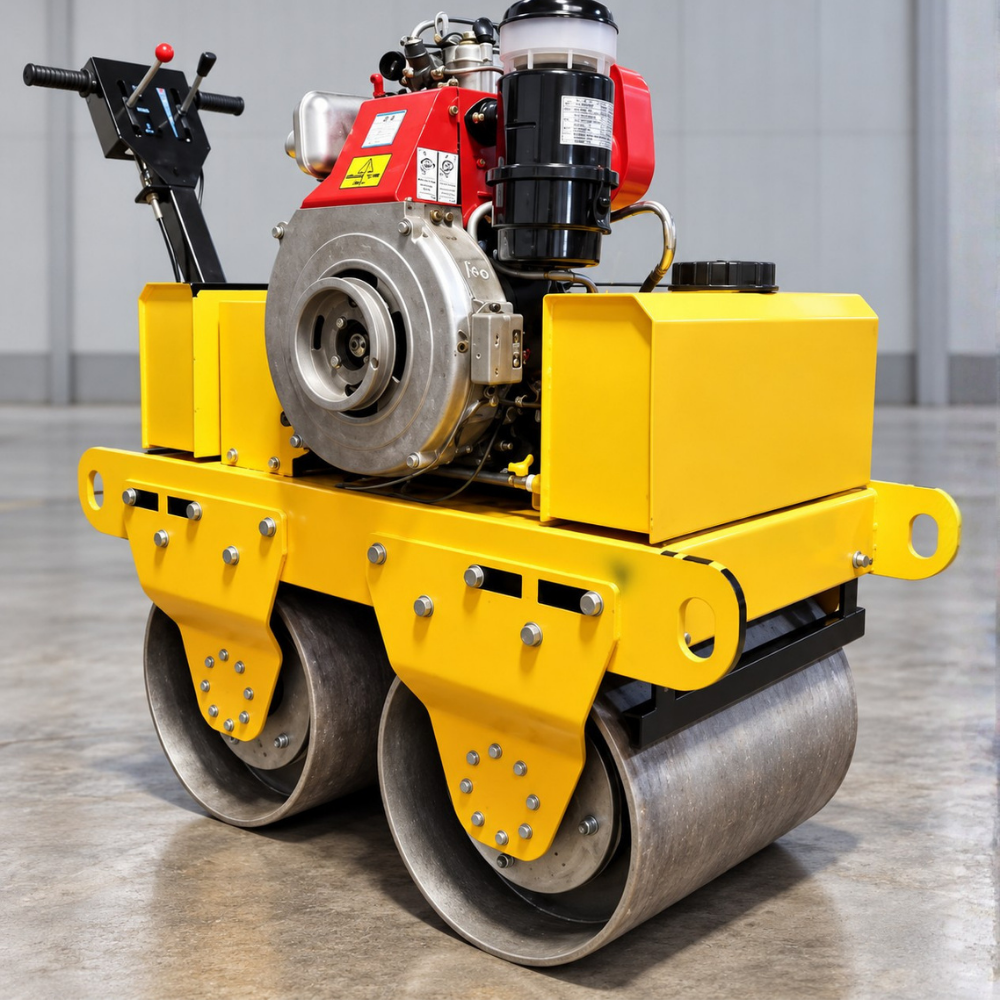
How to Choose Walk Behind Rollers Manufacturers in Delhi for Your Construction Business
Explore walk behind rollers in Delhi from Unique Spairparts. Find single and double drum rollers for road work, soil compaction and construction work.

Krishna Kumar
Buying construction machinery is an important decision for contractors and builders. The right equipment can help workers complete projects with better planning and less unnecessary effort.
Walk behind rollers are commonly used for compacting soil, gravel, sand, and asphalt. They are suitable for road repairs, pathways, parking areas, and small groundwork projects.
Reliable Walk Behind Rollers Manufacturers in Delhi offer different machines for different construction requirements.
Before buying, contractors should compare roller types, drum sizes, engine power, vibration force, and maintenance needs.
Understanding these details helps businesses select equipment that matches their work.
Understand Your Construction Requirements
The first step is to identify the type of work your business performs.
Some contractors mainly repair asphalt roads, while others prepare soil and gravel foundations.
Different materials may need different compaction methods.
For example, a contractor repairing small road sections may prefer a compact double drum roller.
A business working on soil preparation may consider a single drum model.
Buyers should also check the working area, transport access, and expected daily workload.
These details help identify the most suitable machine category.
Compare Single Drum and Double Drum Rollers
Walk behind rollers are available with different drum arrangements.
A single drum machine has one main compaction drum.
It is useful for many soil, sand, gravel, and foundation applications.
A double drum machine uses two steel drums.
These machines are commonly selected for asphalt patches, pathways, and road repairs.
A professional Single Drum Walk Behind Roller may be suitable for projects involving narrow groundwork sections.
The FVR600S is one listed single drum model.
The FVR600 and UNI600 offer double drum options.
The right choice depends on the material, space, and required finish.
Check Engine Power and Drum Width
Engine power and drum width are important machine specifications.
The FVR600 double drum roller is listed with a 9 HP Greaves engine.
It has a 600 mm drum width and a maximum working speed of 4 km per hour.
The FVR600S includes a GX160 engine and a 430 × 600 mm wheel specification.
Another listed option is the mini road roller compactor, featuring a 9 HP diesel engine and a 500 mm drum width.
Buyers should confirm the exact engine, working dimensions, and machine configuration before placing an order.
Understand Vibration Force and Compaction
Many walk behind rollers use vibration to support compaction.
This vibration helps rearrange particles in suitable soil and aggregate materials.
Centrifugal force is commonly measured in kilonewtons, written as kN.
The FVR600S lists a centrifugal force of 15 kN.
The mini road roller compactor lists 30 kN and a vibration frequency of 50 Hz.
Professional Walk Behind Vibratory Roller Manufacturers in Delhi provide machines with different compaction specifications.
Higher force is not always the correct choice for every job.
Contractors should follow the required compaction method for their materials.
Review Warranty and Spare Parts Support
Before purchasing a roller, buyers should consider long-term operating costs.
These may include fuel, servicing, transport, and replacement components.
It is useful to ask about engine maintenance, vibration system inspection, and spare parts availability.
Unique Spairparts supplies walk behind rollers and construction machinery from Delhi.
Its listed FVR600 and mini road roller models include 12-month warranty information.
Buyers can share their project requirements and request model specifications.
A written quotation should clearly mention the machine, warranty, delivery terms, and available support.
Conclusion
Choosing a walk behind roller requires careful comparison.
Contractors should understand the working surface, drum arrangement, engine power, and vibration requirements.
Machine size and transport needs are also important.
Before buying, compare technical specifications and confirm the warranty and service conditions.
A suitable roller can help construction businesses organise road repair and groundwork activities more effectively.
Correct equipment selection also supports better long-term machinery planning.
About the Author
Krishna Kumar
No bio available