How to Choose a Conveyor Tray Sealing Machine for Your Packaging Business
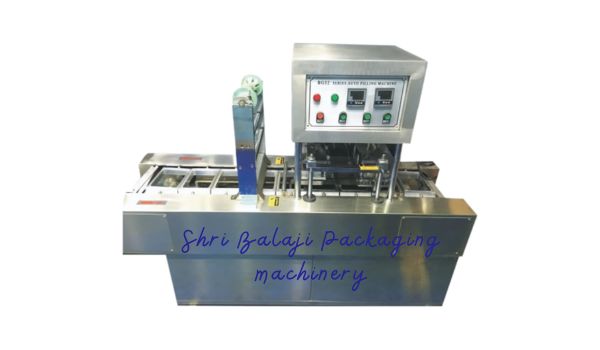
Explore conveyor tray sealing systems from Shri Balaji Packaging. The SBPM-RCT32 helps businesses seal food trays for takeout, catering and meal prep.

Krishna Kumar
Buying a packaging machine is an important decision for any food business. The right equipment can help workers manage daily production, reduce unnecessary manual work, and maintain consistent packaging.
However, different businesses have different packaging requirements.
A restaurant may need a machine for takeaway meals, while a catering company may package hundreds of trays every day.
Choosing a suitable Conveyor Tray Sealing Machine requires comparing machine capacity, tray compatibility, temperature settings, and working space.
Understanding these factors can help buyers make an informed decision.
Understand Your Daily Packaging Requirements
The first step is to calculate how many food trays your business packs each day.
A small kitchen may handle fewer orders, while a commercial meal supplier may need to seal hundreds of trays every hour.
Buyers should also consider future business requirements.
For example, a catering company may receive larger orders during festivals or corporate events.
The selected machine should match the expected workload.
However, a high-capacity machine is not always necessary for every business.
A suitable machine should provide enough production capacity without creating unnecessary operating costs.
Compare Machine Capacity and Production Speed
Production capacity is an important specification.
The SBPM-RCT32 model has a listed capacity of 1,200 trays per hour.
This makes it worth considering for businesses that require regular, high-volume packaging.
A professional High Speed Tray Sealing Machine can support continuous tray movement during production.
However, actual output depends on several factors.
These include tray dimensions, operator speed, filling arrangements, and sealing requirements.
Buyers should not select equipment based only on its maximum stated capacity.
A practical demonstration can help determine whether the machine suits the business's normal working conditions.
Check Tray and Sealing Material Compatibility
Different food businesses use different types of trays.
Some meals require smaller containers, while others need larger or divided trays.
The tray dimensions must match the machine's supported configuration.
The product page lists PE, PP, and foil sealing materials for the SBPM-RCT32.
However, not every film will seal correctly to every tray.
The material combination must be suitable for the intended food and operating temperature.
Buyers should request sample sealing tests before finalising their purchase.
These tests can help identify weak seals, poor fitting, or other packaging problems.
Review Power Supply and Installation Space
Packaging equipment needs suitable installation conditions.
The SBPM-RCT32 has a listed power specification of 220V and 1.2kW.
Its dimensions are 2150 × 700 × 1550 mm.
The machine also has a stated weight of 400 kg.
Businesses should check whether they have enough space for installation, operation, cleaning, and maintenance.
A qualified electrician should confirm that the electrical supply is suitable.
A Continuous Food Tray Sealing Machine should also have enough surrounding space for loading and collecting packaged trays.
Proper layout planning helps workers move safely around the packaging area.
Compare Machine Features and Supplier Support
Before buying, customers should ask for complete machine specifications and operating instructions.
Important details include temperature control, conveyor operation, suitable packaging materials, and maintenance requirements.
Shri Balaji Packaging offers the SBPM-RCT32 conveyor tray sealing machine for meal trays and commercial packaging applications.
The product page highlights continuous operation, uniform sealing, durable construction, and easy handling.
Customers can discuss their packaging requirements and request more information about the machine.
It is also useful to confirm warranty terms, installation needs, spare parts, and technical assistance before purchasing.
Conclusion
Choosing a conveyor tray sealing machine requires careful comparison.
Businesses should understand their packaging volume, tray sizes, sealing materials, and available space.
Machine capacity and electrical requirements are also important.
The SBPM-RCT32 provides a continuous sealing option for suitable commercial applications.
Before placing an order, buyers should request specifications and test their intended packaging materials.
The right machine can support a more organised and dependable packaging process.
About the Author
Krishna Kumar
No bio available