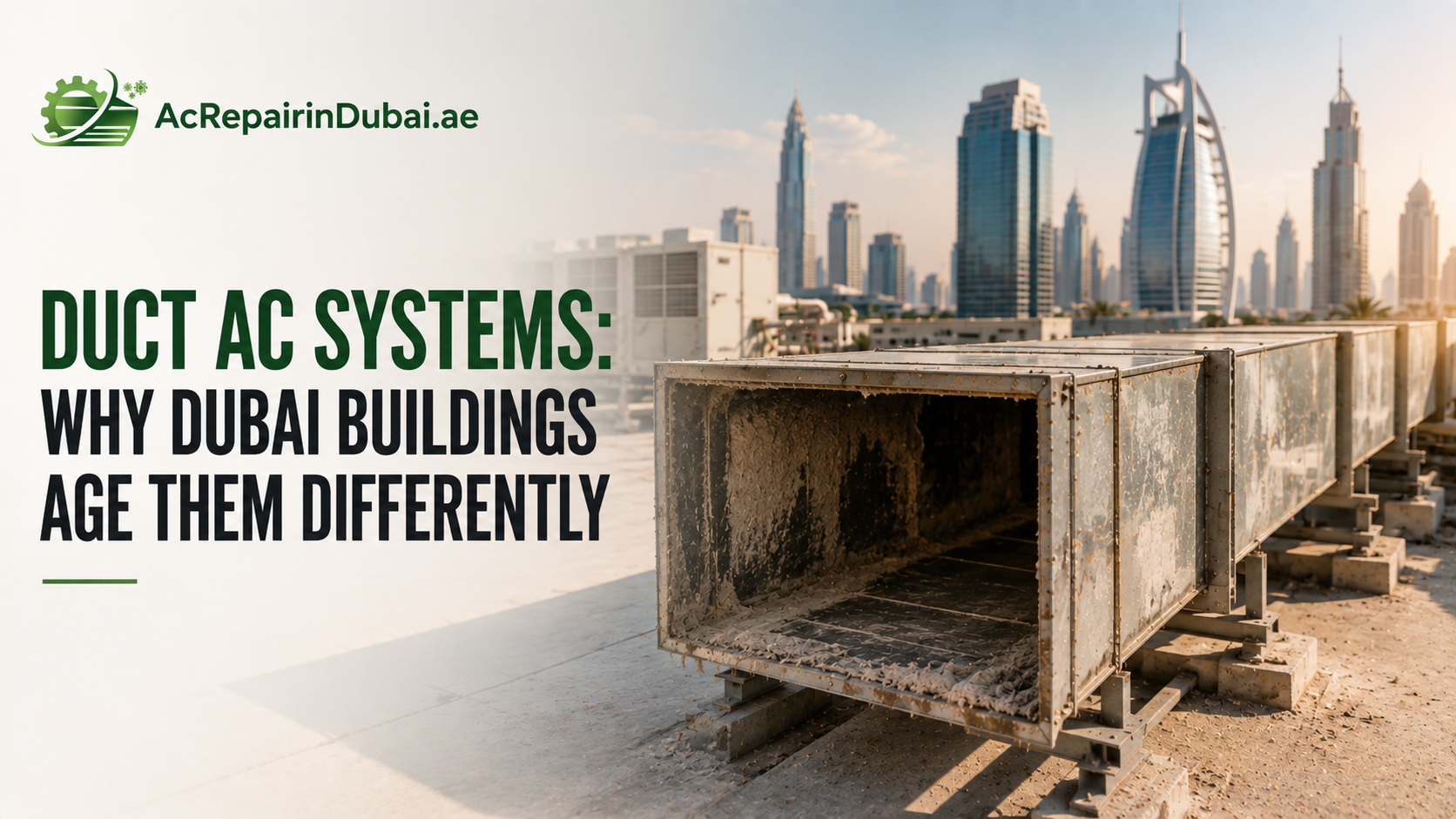
Duct AC Systems: Why Dubai Buildings Age Them Differently
Dubai's heat, dust, and humidity age duct AC systems faster than manufacturers expect. See why, and how to protect your system longer.

Ahsan Abdullah
Why does a duct system in a Dubai tower wear out faster than the same setup somewhere milder? Not a manufacturing flaw. Rarely a bad installation either. Duct AC Systems here face a specific mix of heat, dust, and humidity that most manufacturers never really test for in their standard lifespan numbers.
Understanding what's actually happening inside the walls and ceiling voids changes how you plan maintenance, budget for eventual replacement, and catch warning signs before something small turns into a full system failure.
Why Heat Alone Isn't the Whole Story
Heat gets blamed for most AC wear, but it's really heat and humidity together that stress duct AC systems here. Humid air moving through metal ductwork creates condensation cycles that dry climates don't produce, not in the same way.
That condensation matters more than people assume. Metal ducts expand and contract slightly with temperature fluctuations, and moisture accelerates corrosion along seams and joints over time. A duct system in a desert climate ages differently than one running through Dubai's coastal humidity, even at similar temperatures.
Insulation quality plays a role too, worth mentioning. Poorly sealed insulation lets condensation form on the outside of ducts, which then drips into ceiling voids and slowly damages whatever's around it. Not just the ductwork itself, the surrounding structure too.
Ducted Air Conditioning Dubai Faces a Dust Problem Most Cities Don't
Ducted air conditioning Dubai systems deal with construction dust at a scale most cities never really see, since so much of the city sits under development at any given moment.
Fine particulate matter gets pulled into return air vents constantly, settling inside ductwork faster than filters alone can catch. Over months, that buildup restricts airflow, forces the system to work harder than it should, and speeds up wear on components that weren't really built for this level of exposure.
Buildings near active construction zones see this accelerated aging more clearly than those in older, settled neighborhoods. Genuinely Dubai-specific detail, one most competitor articles skip entirely, since dust load isn't something discussed in generic AC content written for other markets.
Central AC Ductwork Ages Differently Depending on Building Type
Central AC ductwork in high-rise towers experiences different stress than the same systems in villas. Mainly because towers route ductwork through longer vertical shafts, exposed to more temperature swings floor to floor.
A villa's ductwork typically runs a shorter, more consistent path. A tower's might stretch through dozens of floors, each with slightly different sun exposure and cooling demand. Creates uneven wear across the system instead of aging uniformly throughout.
Common factors affecting how fast ductwork ages by building type:
High-rise towers face more variable temperature exposure across floors
Villas often deal with more direct dust intrusion at ground-level intake points
Older buildings sometimes run ductwork sized for outdated cooling loads
Mixed-use buildings combine residential and commercial air handling, adding complexity
Commercial Duct Systems Dubai Handle a Different Kind of Strain
Commercial duct systems Dubai buildings run near-constant operation, unlike residential systems that cycle on and off throughout the day. Changes how components wear over time, quite a bit actually.
Office towers and retail spaces often keep cooling running for extended hours, sometimes close to continuously during business seasons. That steady operation cuts down the on-off cycling stress residential systems deal with, but brings its own wear pattern through sustained mechanical load on fans and motors instead.
What Actually Extends Duct System Lifespan Here
Duct system lifespan in Dubai depends heavily on how consistently the ductwork gets cleaned and inspected. Not just how old the components happen to be.
A system regularly cleaned to remove dust buildup and checked for insulation damage tends to outlast one left untouched for years, even at a similar age. Prevention genuinely matters more here than in cities with less dust and humidity working against the system every single day.
Steps that genuinely extend duct system lifespan:
Scheduling duct cleaning every twelve to eighteen months given local dust levels
Checking insulation for condensation damage during routine servicing
Sealing gaps and leaks promptly rather than waiting for a full inspection
Monitoring airflow consistency across rooms to catch early restriction issues
Duct AC Maintenance That Actually Makes a Difference
Duct AC maintenance focused on dust removal, insulation checks, and seal integrity addresses the specific wear patterns Dubai buildings face. Not generic maintenance advice built for milder climates elsewhere.
At AcRepairinDubai, they consider dust exposure when recommending a maintenance schedule. A villa near active construction needs a different approach than a tower in a settled neighborhood, and generic advice just doesn't account for that.
What This Means for Your System Going Forward
Duct AC Systems in Dubai simply don't follow the same aging timeline manufacturers assume in their standard estimates, and that gap catches a lot of homeowners off guard. Heat and humidity working together, combined with dust levels tied to constant construction, create wear patterns generic maintenance schedules just don't account for. Recognizing your building type and adjusting maintenance frequency accordingly protects the system longer than any one-size-fits-all schedule ever could.
FAQs
Why do duct AC systems age faster in Dubai than in other cities?
The combination of heat, humidity, and construction dust creates wear patterns most manufacturers don't test for in standard lifespan estimates.
How often should ducted air conditioning Dubai systems be cleaned?
Every twelve to eighteen months is realistic here, given how much faster dust and humidity affect ductwork compared to calmer climates.
Does central AC ductwork age differently in villas versus towers?
Yes. Towers face more variable temperature exposure across floors, while villas often deal with more direct dust intrusion at ground level.
What affects duct system lifespan the most in Dubai's climate?
Consistent cleaning and insulation checks matter more here than almost anywhere else, since dust and humidity actively work against the system daily.
Are commercial duct systems Dubai buildings use different from residential ones?
Yes. Commercial systems often run near-continuously, creating sustained mechanical wear rather than the on-off cycling residential systems typically experience.
What does proper duct AC maintenance actually involve here?
Regular dust removal, insulation inspection, and prompt seal repairs, tailored to building type rather than a generic maintenance schedule.
Understanding Your System Changes How You Maintain It
Dubai's climate and construction pace put real, measurable strain on duct AC systems that most manufacturers never fully account for in their lifespan estimates. Humidity speeds up corrosion. Dust restricts airflow faster than expected. Building type shapes how evenly wear spreads throughout the system. Now that you know what's actually driving this aging pattern, ready to get your ductwork inspected before small wear turns into a costly replacement?
About the Author
Ahsan Abdullah
Ahsan Abdullah is a Pakistan-based SEO Expert with experience working on both local and international SEO projects. I specializes in on-page SEO, technical SEO, keyword research, and content optimization, helping businesses improve search rankings, increase organic traffic, and strengthen their online presence through data-driven SEO strategies.