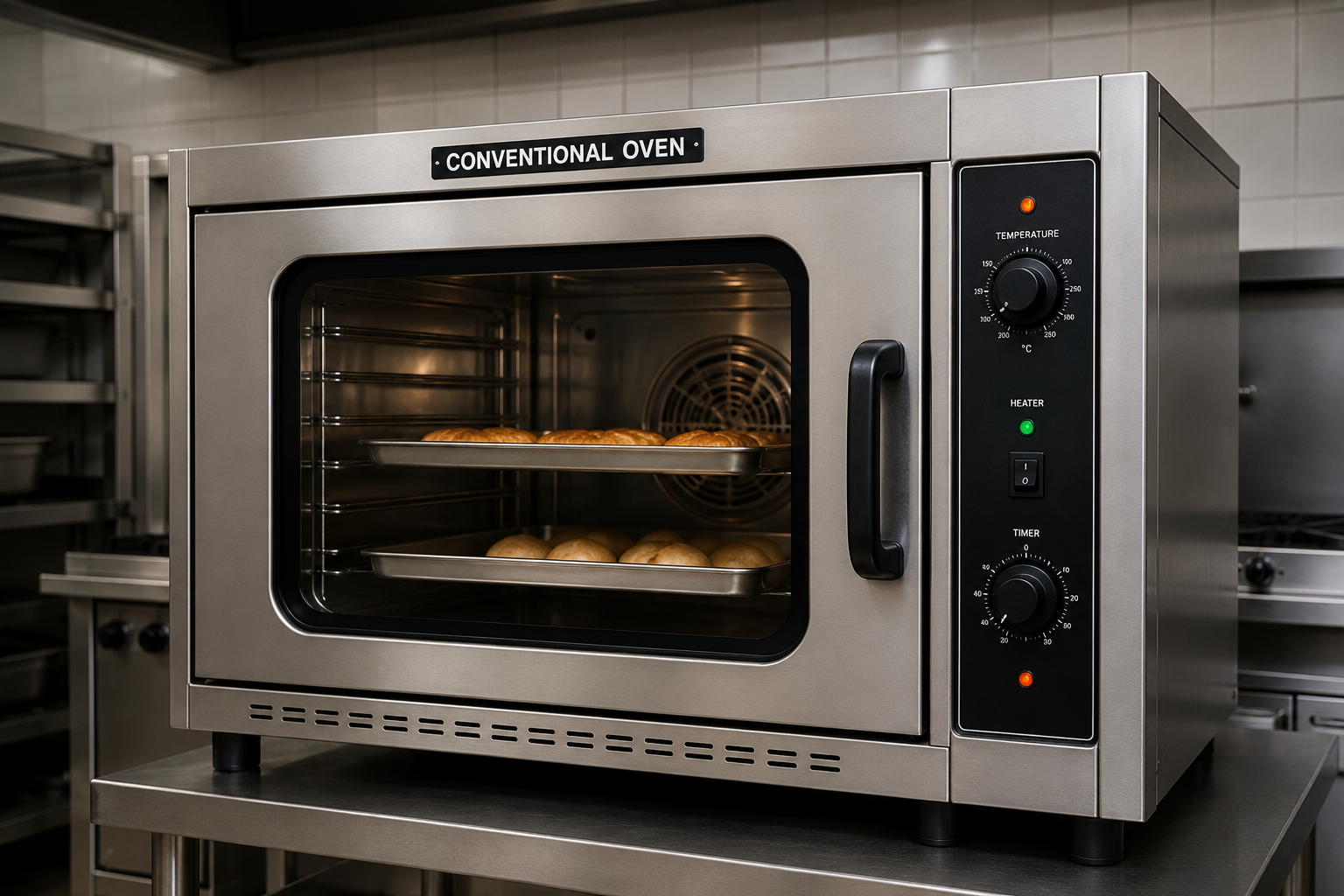
Conventional Oven: A Complete Guide to Features, Benefits, and Commercial Uses
Learn how a conventional oven works, its benefits, commercial uses, limitations, and tips for choosing the right oven for your restaurant or bakery.

emma johnson
Whether you're running a restaurant, bakery, café, or catering business, choosing the right cooking equipment can directly impact food quality and kitchen efficiency. Among the most commonly used appliances is the conventional oven, a reliable and versatile solution for baking, roasting, and reheating a wide variety of dishes. While newer technologies like convection ovens have become popular, the conventional oven remains a preferred choice for many commercial kitchens due to its simplicity, affordability, and consistent performance.
In this guide, you'll learn how a conventional oven works, its benefits, common applications, limitations, and how to choose the right model for your foodservice business.
What Is a Conventional Oven?
A conventional oven is a cooking appliance that uses heating elements located at the top and bottom of the oven cavity to generate heat. Unlike convection ovens, a conventional oven does not use a fan to circulate hot air. Instead, heat naturally rises and spreads throughout the cooking chamber.
Because heat distribution depends on natural airflow, food may require rotation during cooking to achieve even browning. Despite this, a conventional oven remains an excellent choice for recipes that benefit from gentle, steady heat.
How Does a Conventional Oven Work?
A conventional oven operates using electric heating elements or gas burners. Once the desired temperature is set, the heating elements warm the oven cavity, and the heat cooks food through radiant and natural convection heat.
The upper heating element provides browning and finishing, while the lower element supplies the primary cooking heat. Since there is no internal fan, some areas inside the conventional oven may become slightly hotter than others, making proper rack placement important.
Benefits of Using a Conventional Oven
1. Consistent Baking Results
Many professional bakers prefer a conventional oven because it produces gentle heat that helps cakes, pastries, and bread rise evenly without excessive air circulation.
2. Simple to Operate
A conventional oven has straightforward controls, making it easy for kitchen staff to operate with minimal training.
3. Lower Initial Cost
Compared to advanced cooking equipment, a conventional oven is generally more affordable, making it an excellent investment for new restaurants and small food businesses.
4. Suitable for Multiple Recipes
A conventional oven is ideal for:
Cakes
Cookies
Bread
Lasagna
Roasted vegetables
Casseroles
Pizza
Baked pasta
Roasted meats
Conventional Oven vs. Convection Oven
Many buyers compare a conventional oven with a convection oven before making a purchase.
FeatureConventional OvenConvection OvenHeat DistributionNaturalFan-assistedCooking SpeedModerateFasterEnergy EfficiencyGoodBetterBaking CakesExcellentGoodRoasting MeatGoodExcellentPriceLowerHigherMaintenanceEasierModerate
A conventional oven is often the better option when baking delicate items that require stable temperatures, while convection ovens excel at roasting and high-volume cooking.
Common Commercial Applications
A conventional oven is widely used in:
Restaurants
Bakeries
Cafés
Hotels
Schools
Hospitals
Catering businesses
Food courts
Institutional kitchens
Its versatility makes the conventional oven one of the most dependable appliances in commercial foodservice operations.
Factors to Consider Before Buying a Conventional Oven
Capacity
Choose a conventional oven that matches your kitchen's production volume. Small cafés may only need a compact countertop model, while restaurants often require larger floor-standing units.
Fuel Type
A conventional oven is available in:
Electric
Natural Gas
LPG
The right option depends on utility availability, operating costs, and kitchen setup.
Temperature Range
Look for a conventional oven that offers precise temperature control, especially if your menu includes baked goods and specialty recipes.
Interior Construction
Stainless steel interiors improve durability, simplify cleaning, and help maintain hygiene standards.
Energy Efficiency
Modern conventional ovens often include better insulation and improved temperature control to reduce energy consumption without sacrificing cooking performance.
Maintenance Tips
Proper maintenance extends the lifespan of your conventional oven.
Clean food spills after each use.
Inspect door seals regularly.
Avoid using abrasive cleaning chemicals.
Check temperature calibration periodically.
Keep heating elements free from grease buildup.
Schedule preventive maintenance for commercial units.
Routine maintenance helps your conventional oven deliver consistent cooking performance while reducing repair costs.
Common Mistakes to Avoid
When using a conventional oven, avoid these common errors:
Overloading the oven with too many trays.
Frequently opening the oven door during cooking.
Ignoring preheating requirements.
Placing food too close to the heating elements.
Using incorrect cookware.
Following best practices helps improve food quality and cooking consistency.
Is a Conventional Oven Right for Your Business?
A conventional oven is an excellent choice if your business focuses on:
Baking cakes
Cookies
Artisan bread
Pastries
Casseroles
Traditional baked dishes
If your kitchen prioritizes simplicity, affordability, and dependable performance, investing in a high-quality conventional oven can be a practical long-term decision.
For businesses comparing commercial cooking equipment, exploring different commercial ovens and kitchen solutions can help you choose the best equipment for your operational needs. Learn more about professional cooking equipment at The Horeca Store.
Frequently Asked Questions
What is a conventional oven?
A conventional oven uses upper and lower heating elements to cook food without a fan, relying on natural heat circulation.
Is a conventional oven better for baking?
Yes. Many bakers prefer a conventional oven because it provides stable heat, making it ideal for cakes, bread, and pastries.
Does a conventional oven cook slower?
Generally, yes. A conventional oven typically takes slightly longer than a convection oven because it does not circulate hot air with a fan.
Can restaurants use conventional ovens?
Absolutely. Many restaurants, cafés, bakeries, and catering businesses use a conventional oven for baking, roasting, and reheating menu items.
Conclusion
A conventional oven remains one of the most dependable cooking appliances for both home and commercial kitchens. Its simple operation, affordable price, and reliable cooking performance make it a valuable investment for restaurants, bakeries, cafés, and foodservice businesses. By selecting the right conventional oven, maintaining it properly, and using it according to best practices, you can achieve consistent cooking results while improving kitchen productivity.
About the Author
emma johnson
No bio available