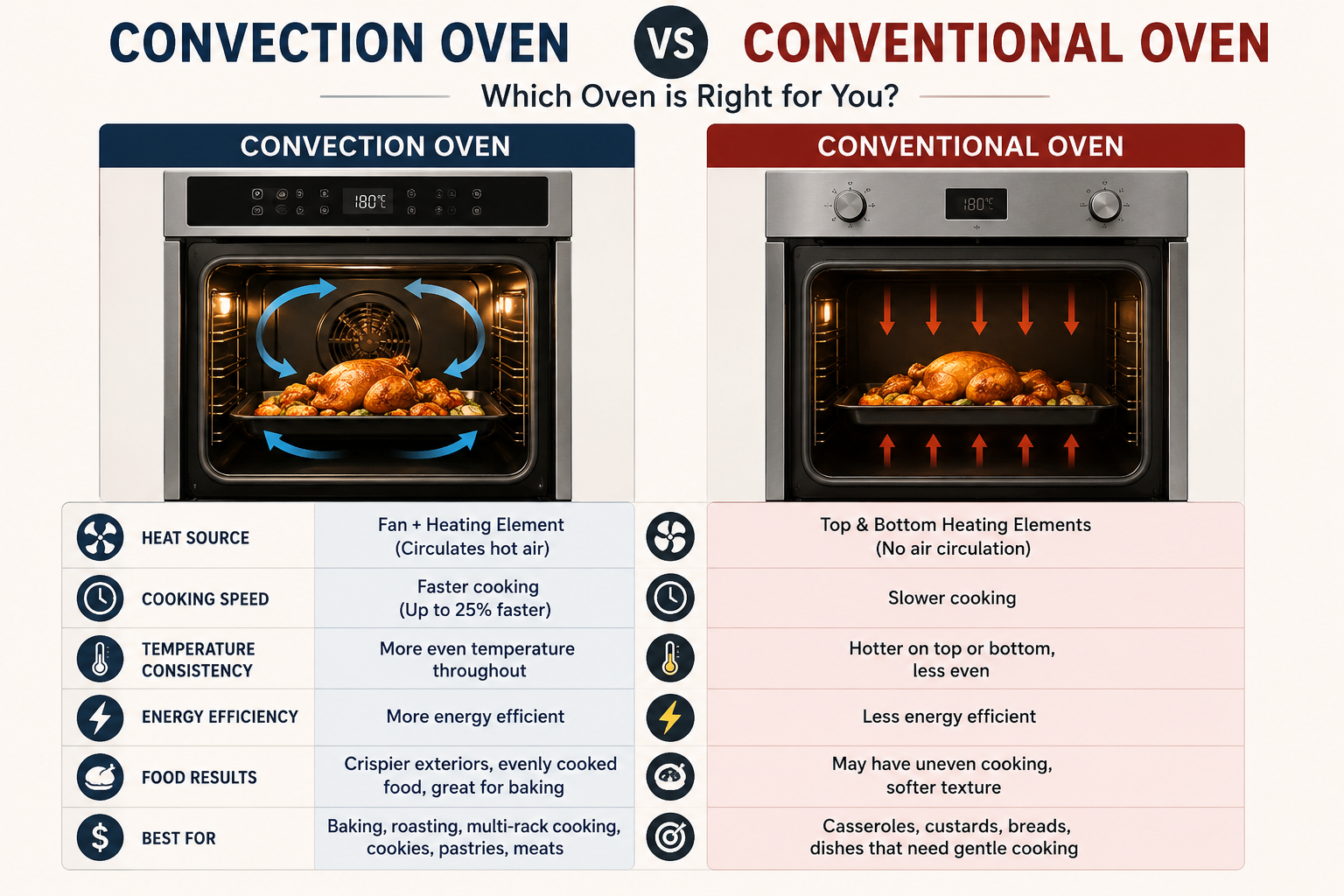
Convection Oven vs Conventional Oven: Which One Is Best for Your Kitchen?
Compare convection oven vs conventional oven, their features, cooking performance, energy efficiency, and find the best option for your kitchen.

emma johnson
Whether you're running a restaurant, bakery, café, or catering business, selecting the right oven is essential for delivering consistent food quality and improving kitchen efficiency. One of the most common comparisons in the foodservice industry is convection oven vs conventional oven. While both appliances are designed to bake, roast, and cook food, they differ significantly in how they distribute heat, cooking speed, and overall performance.
Understanding the differences between a convection oven vs conventional oven can help you choose the right equipment for your menu, kitchen workflow, and budget.
What Is a Conventional Oven?
A conventional oven uses heating elements located at the top and bottom of the oven cavity. Heat naturally circulates inside the oven without the assistance of a fan.
Because the hot air is not actively distributed, food may cook unevenly, requiring tray rotation for consistent results. However, a conventional oven remains an excellent choice for recipes that benefit from gentle and stable heat.
Best Uses
Cakes
Bread
Brownies
Cookies
Lasagna
Casseroles
Roasted vegetables
What Is a Convection Oven?
A convection oven includes a built-in fan and exhaust system that continuously circulates hot air throughout the cooking chamber. This airflow distributes heat evenly, reducing cooking time and producing more consistent results.
Many commercial kitchens prefer convection ovens because they improve productivity while maintaining food quality.
Best Uses
Roasted chicken
Pizza
Cookies
Puff pastries
Vegetables
Large batch baking
Frozen foods
Convection Oven vs Conventional Oven: Key Differences
FeatureConvection OvenConventional OvenHeat DistributionFan circulates hot airNatural heat circulationCooking SpeedFasterSlowerEven CookingExcellentModerateEnergy EfficiencyHigherModerateBaking CakesGoodExcellentRoasting MeatExcellentGoodCrisping FoodExcellentModeratePurchase CostHigherLowerMaintenanceModerateEasy
How Heat Distribution Differs
The biggest difference in convection oven vs conventional oven is heat circulation.
A conventional oven relies on natural heat movement. Since hot air rises, some areas become hotter than others.
A convection oven constantly circulates heated air using an internal fan, creating a uniform cooking temperature throughout the cavity.
This reduces:
Hot spots
Uneven browning
Cooking inconsistencies
Cooking Time Comparison
One of the biggest advantages in the convection oven vs conventional oven comparison is cooking speed.
A convection oven generally cooks food:
20–30% faster
At temperatures approximately 25°F (15°C) lower than a conventional oven
This improves productivity during busy service hours.
Energy Efficiency
When comparing convection oven vs conventional oven, energy efficiency is another important consideration.
Since convection ovens cook faster, they consume less energy for many cooking tasks.
Restaurants operating multiple hours daily often experience reduced utility costs after switching to convection ovens.
Food Quality Comparison
Conventional Oven
Produces soft, moist baked goods.
Ideal for:
Sponge cakes
Cheesecakes
Custards
Bread
Convection Oven
Produces crisp exteriors and evenly browned food.
Perfect for:
Roasted chicken
French fries
Pizza
Cookies
Puff pastries
Which Oven Is Better for Baking?
For delicate baked goods, many pastry chefs still prefer a conventional oven.
Because there is no circulating fan, cake batter rises more evenly without excessive air movement.
Choose a conventional oven for:
Cakes
Muffins
Quick breads
Soufflés
Which Oven Is Better for Roasting?
In the convection oven vs conventional oven debate, convection ovens clearly outperform conventional ovens for roasting.
The moving hot air creates:
Crisp skin
Even browning
Faster cooking
Better caramelization
Ideal for:
Chicken
Turkey
Beef
Vegetables
Potatoes
Advantages of a Convection Oven
Faster cooking
Even heat distribution
Better browning
Energy efficient
Suitable for high-volume kitchens
Consistent results
Reduced cooking times
Advantages of a Conventional Oven
Lower purchase cost
Easy operation
Excellent for baking
Less maintenance
Ideal for delicate recipes
Reliable cooking performance
Disadvantages of a Convection Oven
Higher initial investment
Fan may dry certain baked goods
Requires recipe adjustments
More components to maintain
Disadvantages of a Conventional Oven
Slower cooking
Uneven heat distribution
Higher energy usage over time
Requires tray rotation
Longer preheating
Which Oven Should Restaurants Choose?
The right choice depends on your menu and production volume.
Choose a Convection Oven if you:
Serve high customer volumes
Roast meat daily
Bake multiple trays simultaneously
Want faster cooking
Need consistent results
Choose a Conventional Oven if you:
Operate a bakery
Bake delicate cakes
Prefer traditional baking methods
Have a limited equipment budget
Buying Tips
Before purchasing either oven, consider:
Kitchen size
Daily production volume
Menu requirements
Available utilities (gas or electric)
Energy efficiency
Maintenance costs
Warranty
Capacity
Investing in the right commercial oven improves productivity and food consistency while reducing operating costs.
If you're looking for high-quality commercial ovens, explore the extensive range of restaurant cooking equipment available at The Horeca Store.
Frequently Asked Questions
Is a convection oven better than a conventional oven?
It depends on your cooking needs. A convection oven is better for roasting and high-volume cooking, while a conventional oven is often preferred for delicate baking.
Why does a convection oven cook faster?
The internal fan circulates hot air around the food, transferring heat more efficiently than a conventional oven.
Can I bake cakes in a convection oven?
Yes, but you may need to reduce the temperature slightly and shorten the cooking time. Many bakers still prefer conventional ovens for delicate cakes.
Which oven is more energy efficient?
A convection oven is generally more energy efficient because it cooks food faster and often at lower temperatures.
Which oven is best for restaurants?
Restaurants with high production demands usually benefit from convection ovens, while bakeries and pastry shops often continue using conventional ovens for specific baked goods.
Conclusion
When comparing convection oven vs conventional oven, there is no universal winner. The best choice depends on your cooking style, menu, and business requirements. A conventional oven offers reliable, gentle heating that's ideal for baking, while a convection oven provides faster cooking, even heat distribution, and improved efficiency for roasting and high-volume food preparation. By understanding the strengths of each, restaurant owners can invest in equipment that enhances kitchen performance, food quality, and customer satisfaction.
About the Author
emma johnson
No bio available