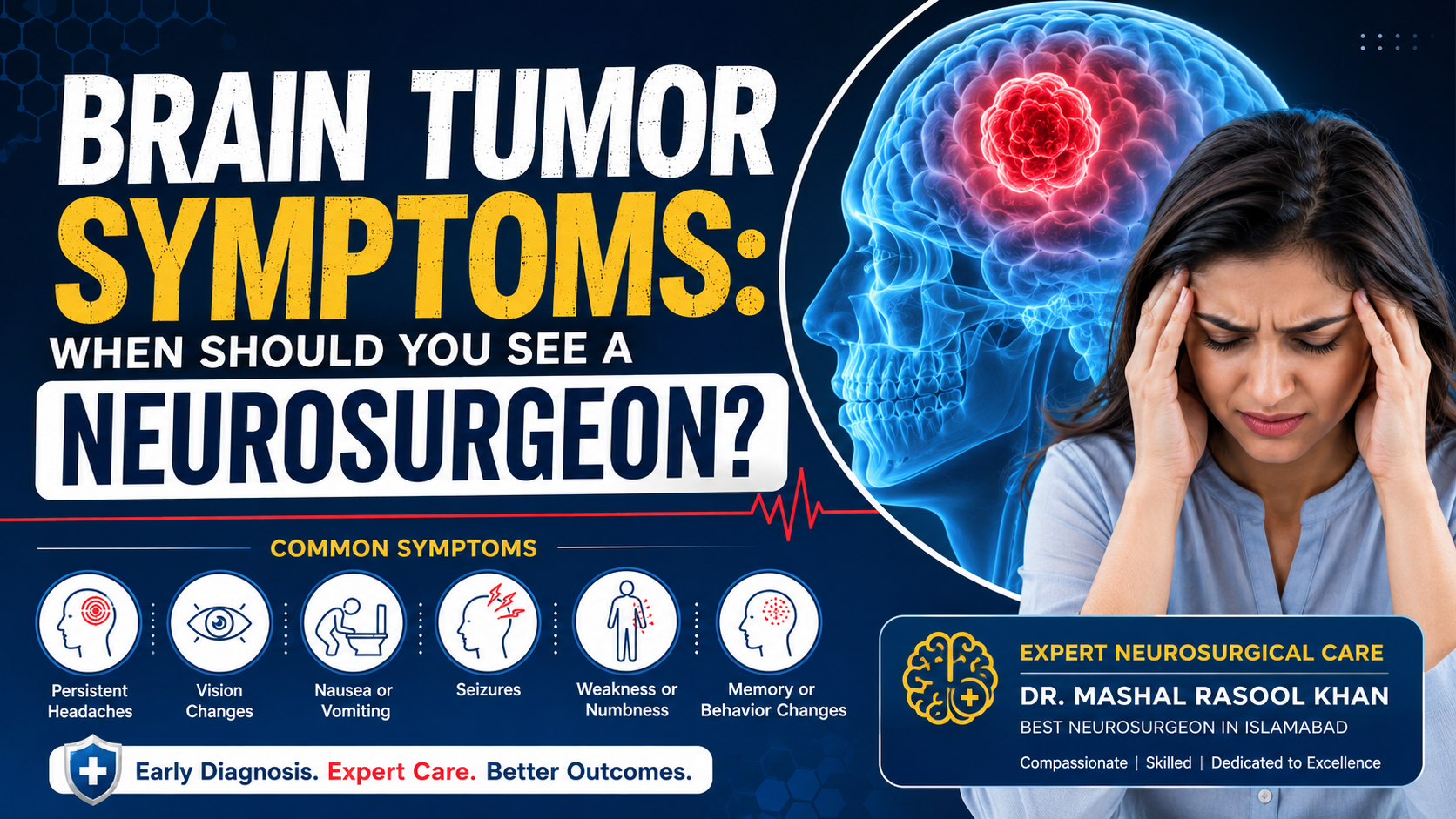
Brain Tumor Symptoms: When Should You See a Neurosurgeon?
<p>Brain tumors develop when abnormal cells grow in or around the brain. Although many brain tumors are not cancerous, they can sometimes interfere with normal brain function and cause neurological sy
Muhammad_Blogger
Brain tumors develop when abnormal cells grow in or around the brain. Although many brain tumors are not cancerous, they can sometimes interfere with normal brain function and cause neurological symptoms. Recognizing possible brain tumor symptoms and seeking timely medical advice can help identify the underlying cause and determine whether specialist care is needed.
For patients in Pakistan, persistent or unexplained neurological symptoms may warrant consultation with an experienced neurosurgeon in Islamabad or another qualified specialist. Early evaluation can provide clarity and help guide the next appropriate step.
What Are the Common Symptoms of a Brain Tumor?
Brain tumor symptoms can vary significantly depending on the tumor's location, size, growth pattern, and effect on nearby brain tissue. Importantly, many of these symptoms can also result from other medical conditions, so experiencing one symptom does not necessarily mean that a person has a brain tumor.
Some commonly reported warning signs include:
1. Persistent or Changing Headaches
Headaches are extremely common, but a headache that is new, persistent, increasingly severe, or noticeably different from previous headaches should be evaluated. Headaches accompanied by other neurological symptoms may require further investigation.
2. Vision Problems
Changes such as blurred vision, double vision, or other unexplained visual disturbances can sometimes be associated with neurological conditions. Persistent or unexplained vision changes should be assessed by a healthcare professional.
3. Nausea and Vomiting
Repeated nausea or vomiting without an obvious cause may sometimes occur with conditions that affect pressure within the skull. When vomiting occurs together with persistent headaches, vision problems, or other neurological changes, medical assessment becomes particularly important.
4. Seizures
A first-time seizure should always receive prompt medical attention. Seizures can have numerous causes, and a doctor may recommend neurological assessment and appropriate investigations to determine what is causing them.
5. Weakness, Numbness, or Balance Problems
Unexplained weakness or numbness in an arm, leg, or one side of the body may indicate an issue affecting the nervous system. Difficulty walking, poor coordination, or persistent balance problems should also be medically evaluated.
6. Speech, Memory, or Behavioral Changes
Difficulty finding words, changes in speech, unexplained memory problems, confusion, or noticeable changes in behavior may have several possible causes. When these changes persist or progressively worsen, professional assessment is advisable.
When Should You See a Neurosurgeon?
Not every headache or neurological symptom requires a neurosurgical consultation. However, you should seek medical advice when symptoms are persistent, progressive, unexplained, or occurring in combination.
For example, repeated headaches accompanied by seizures, vision changes, weakness, balance difficulties, or changes in memory and speech deserve appropriate medical evaluation rather than self-diagnosis.
Patients who cannot easily travel or want to discuss their symptoms before arranging an in-person appointment may consider an online neurosurgeon consultation. A specialist can review the available information and advise whether an examination, imaging, or further investigation may be appropriate.
How Are Brain Tumors Diagnosed?
Symptoms alone cannot confirm the presence of a brain tumor. Diagnosis generally begins with a detailed medical history and neurological examination. Depending on the symptoms and clinical findings, a doctor may recommend diagnostic imaging.
MRI and CT scans are commonly used to examine structures within the brain. Additional tests may be recommended when necessary to better understand an abnormality and determine the appropriate course of care.
It is important not to assume that every headache, episode of nausea, or vision problem indicates a tumor. Several neurological and non-neurological conditions can produce similar symptoms, which is why professional assessment is essential.
Choosing an Experienced Neurosurgeon in Islamabad
When persistent neurological symptoms require specialist attention, choosing an experienced neurosurgeon can help patients receive appropriate evaluation and understand their treatment options.
Dr. Mashal Rasool Khan is a neurosurgeon in Islamabad with experience in the evaluation and management of brain and spine-related neurological conditions. Patients can learn more about her professional expertise and neurosurgical services through her neurosurgeon in Islamabad profile.
For individuals seeking information specifically related to brain conditions and neurosurgical care, her brain neurosurgery services provide additional information about specialist brain care.
Brain and Spine Symptoms Can Overlap
The nervous system includes the brain, spinal cord, and an extensive network of nerves. As a result, symptoms such as weakness, numbness, pain, difficulty walking, or coordination problems can sometimes originate from different parts of the nervous system.
A thorough specialist assessment can help determine whether symptoms are related to the brain, spine, spinal cord, nerves, or another underlying condition. Patients researching spinal conditions and specialist treatment can also explore spine surgery services in Islamabad.
Don't Ignore Persistent Neurological Changes
Brain tumor symptoms can be subtle, and they can differ from one person to another. A headache alone does not mean that someone has a brain tumor, but persistent or unusual symptoms should not be dismissed—particularly when several neurological symptoms occur together.
Timely medical evaluation can help identify the actual cause of symptoms and determine whether further neurological or neurosurgical assessment is necessary. For patients in Islamabad and across Pakistan, consulting a qualified specialist such as Dr. Mashal Rasool Khan can be an important step toward understanding concerning neurological symptoms.
Frequently Asked Questions
1. What are the most common brain tumor symptoms?
Possible symptoms include persistent or changing headaches, seizures, vision problems, nausea or vomiting, weakness, numbness, balance difficulties, and changes in speech, memory, or behavior.
2. Do frequent headaches mean I have a brain tumor?
No. Headaches are common and can have many causes. However, a new, persistent, worsening, or unusual headache—especially when accompanied by other neurological symptoms—should be discussed with a healthcare professional.
3. When should I see a neurosurgeon for headaches?
Consider seeking specialist advice when headaches are persistent, progressively worsening, unusual for you, or associated with symptoms such as seizures, weakness, vision changes, confusion, or balance problems.
4. Can a brain tumor be diagnosed from symptoms alone?
No. Symptoms may indicate that further evaluation is necessary, but a diagnosis requires medical assessment and, when appropriate, diagnostic imaging or other investigations.
5. Is an online neurosurgeon consultation useful?
An online consultation can be useful for discussing symptoms, previous medical reports, medical history, and possible next steps. The neurosurgeon can determine whether an in-person examination or additional testing may be necessary.
Conclusion
Recognizing possible brain tumor symptoms does not mean assuming the worst. Many symptoms associated with brain tumors can also occur because of other conditions. The key is to seek appropriate medical advice when neurological symptoms are persistent, progressive, unusual, or occur together.
For patients seeking specialist neurological care in Islamabad, Dr. Mashal Rasool Khan offers expertise in brain and spine-related neurosurgical conditions. A timely consultation can help patients better understand their symptoms and determine the appropriate path for further evaluation and care.
About the Author
Muhammad_Blogger
No bio available