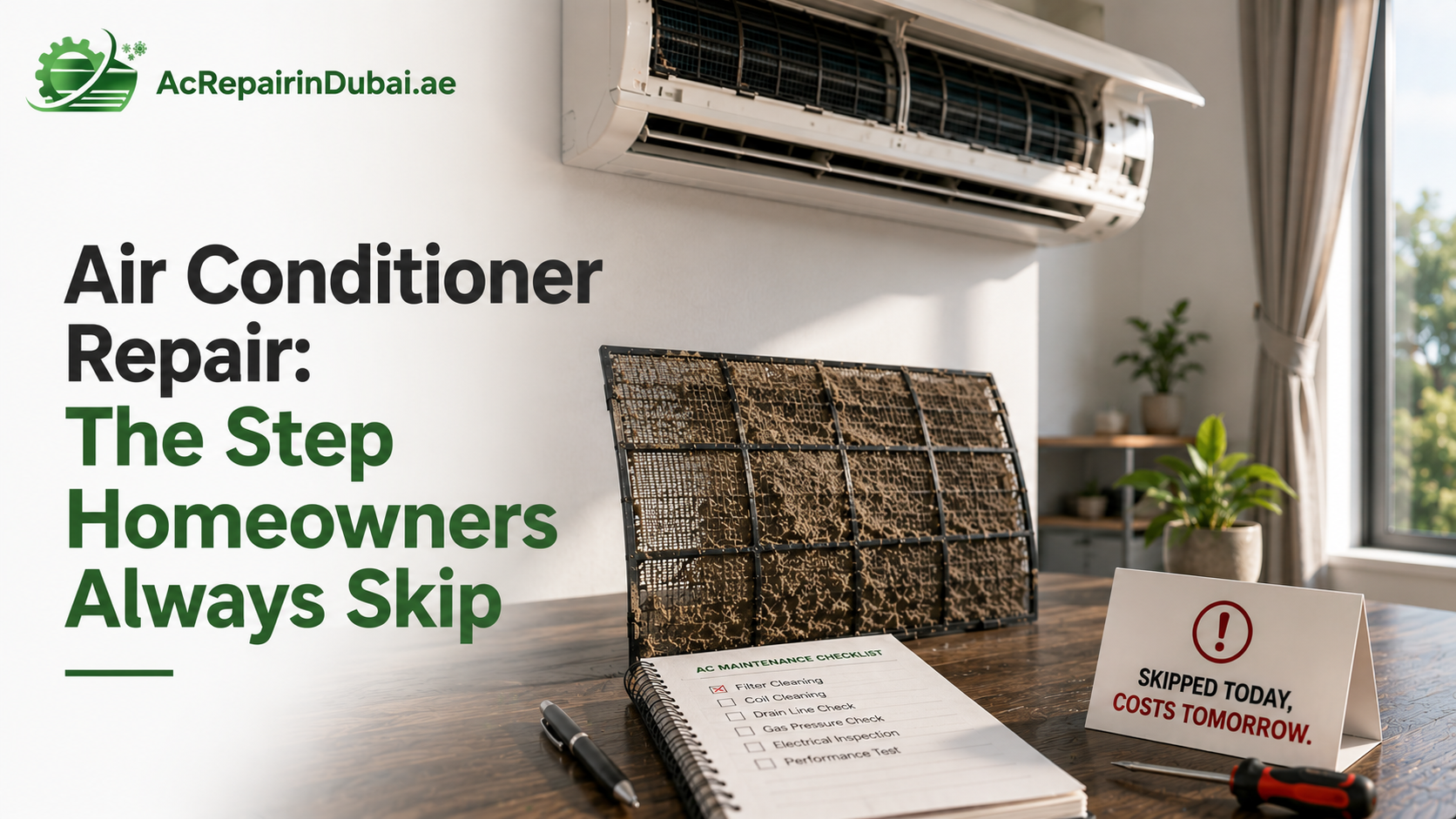
Air Conditioner Repair: The Step Homeowners Always Skip
Most air conditioner repair jobs end too soon. See the follow-up step homeowners skip, and why it protects your warranty and wallet.

Ahsan Abdullah
Why does the same AC problem keep coming back a few months after it's supposedly fixed? It's not bad luck, and it's rarely a bad repair either. Most Air Conditioner Repair jobs end the moment the unit starts blowing cold again, the technician packs up, the invoice gets paid, and everyone moves on. Nobody circles back to confirm the fix actually held under real conditions, not just in the hour right after the visit.
That missing follow-up step is exactly why so many homeowners end up calling again within months for what looks like a new problem but is often just the old one resurfacing. Understanding why that check matters, and what it actually involves, changes how much you get out of every repair going forward.
Why the Job Doesn't Really End When the AC Turns Back On
A unit blowing cold air right after a repair only confirms the immediate fix worked, not that the underlying cause got fully resolved. Some problems only reveal themselves under sustained use, hours or days later, not minutes.
A technician tightens a connection, replaces a capacitor, tops up refrigerant, and the unit runs fine for the test. That's the easy part, honestly. Air conditioner repair work often addresses the symptom that was checked, but a related issue nearby can still be building toward failure without anyone noticing yet.
This is where an ac repair follow-up actually earns its place. A short recheck days or weeks later catches problems the original visit couldn't have shown, simply because not enough time had passed for symptoms to reappear.
Why AC Not Cooling After Repair Happens More Than People Think
AC not cooling after repair situations usually trace back to a related component that was already weakening but hadn't failed yet during the original visit, not a mistake made by the technician.
It's genuinely frustrating when this happens, and homeowners often assume it means the first repair was done poorly. Sometimes that's true. More often, though, it's a second part reaching the end of its life around the same time as the first, purely coincidental timing rather than negligence.
Common reasons cooling issues return after a repair:
A second component was already close to failure during the original visit
Refrigerant levels shift again if there's a slow, hard-to-detect leak
Electrical connections loosen under continued vibration and heat
The original diagnosis addressed a symptom rather than the root cause
What an AC Technician Recheck Should Actually Cover
A proper ac technician recheck tests the repaired component under real operating conditions, checks nearby parts for early wear, and confirms performance stayed consistent since the original visit.
This isn't the same as calling back because something broke again. A recheck happens proactively, scheduled a few weeks after the repair, specifically to catch anything the first visit might have missed while everything was still settling in.
What a genuine recheck should include:
Testing cooling output against the readings taken during the original repair
Checking connections and parts adjacent to whatever was originally fixed
Confirming refrigerant levels haven't shifted since the last visit
Asking the homeowner directly whether performance has stayed consistent
Why Repeat AC Breakdown Patterns Often Get Misread
A repeat ac breakdown within a short window usually gets blamed on the technician or the part quality, but it's frequently a sign that no follow-up check happened after the first visit to confirm the fix held.
Homeowners understandably assume a second breakdown means the first repair failed outright. Sometimes it did. But a lot of "repeat" breakdowns are actually a second, unrelated issue that was never checked for, simply because nobody looked past the original symptom.
Understanding AC Repair Warranty Dubai Protections
AC repair warranty Dubai coverage typically protects the specific part and labor involved in a repair for a set period, usually 30 to 90 days, but only if you have documentation showing what was done.
This is where skipping the follow-up step gets expensive. Without a written record of the original repair and a documented recheck, proving a warranty claim becomes harder if the same issue resurfaces later. Keep the invoice, keep any notes from the technician, and ask directly what the warranty covers before the crew leaves.
The Dubai-Specific Reason This Step Matters More Here
Dubai's heat load puts continuous stress on repaired components in a way milder climates don't, and that's a detail most competitor articles never mention. A repair that would hold comfortably in a cooler climate gets tested harder here within the first few weeks, simply because the unit runs longer hours at higher intensity. That's exactly why a follow-up check carries more weight in Dubai than in cities where units get more rest between cycles.
At AcRepairinDubai, they schedule a recheck as a standard part of every repair, not an upsell tacked on afterward. It's built into how we handle the job from the start.
Making Follow-Up Checks Part of Your Routine
Treating a follow-up check as a normal part of Air Conditioner Repair, rather than something extra, catches small issues before they turn into repeat breakdowns and protects whatever warranty coverage came with the original job.
Ask about this before the technician leaves, not after something goes wrong again. A company willing to build in a recheck, rather than waiting for you to call back with a complaint, is usually the one worth trusting with the next job too.
FAQs
Why does ac not cooling after repair happen even after a proper fix?
Usually, a second component was already weakening during the original visit and simply hadn't failed yet, unrelated to the technician's original work.
What should an ac technician recheck actually involve?
Testing the repaired part under real conditions, checking nearby components, and confirming refrigerant levels and performance stayed consistent.
Is a repeat ac breakdown always the technician's fault?
Not always. It's often a separate, unrelated issue that went unchecked simply because no follow-up visit happened after the first repair.
How does ac repair warranty Dubai coverage actually work?
It typically covers the specific part and labor for 30 to 90 days, but you need documentation from the original visit to make a claim.
Should I ask for an ac repair follow-up even if the unit seems fine?
Yes. Some issues only show up after sustained use, so a proactive recheck catches problems before they turn into a full breakdown.
Does Dubai's climate make follow-up checks more important than in other cities?
Yes. Continuous heat load puts more stress on repaired parts here, so issues tend to surface faster than in cooler climates.
The Step That Actually Finishes the Job
Air Conditioner Repair doesn't really end when the unit starts blowing cold air again, even though that's where most homeowners stop paying attention. A short follow-up check weeks later catches what the original visit couldn't have shown yet, and it protects whatever warranty coverage you're entitled to if something does resurface.
Dubai's heat load makes this step matter more here than in milder climates, since repaired components get tested harder and faster. Now that you know what's actually missing from most repair visits, ready to ask for a recheck before the next problem has a chance to show up?
About the Author
Ahsan Abdullah
Ahsan Abdullah is a Pakistan-based SEO Expert with experience working on both local and international SEO projects. I specializes in on-page SEO, technical SEO, keyword research, and content optimization, helping businesses improve search rankings, increase organic traffic, and strengthen their online presence through data-driven SEO strategies.