Address to Coordinates or Coordinates to Address: Which Direction Do You Need?
Understand address to coordinates vs coordinates to address conversion and choose the right geocoding method.

Sofia
Most geocoding questions boil down to one of two directions, and mixing them up early in a project design leads to a confusing rebuild later. An address to coordinates api and a coordinates to address api solve mirror-image problems, and most real products end up needing both eventually, even if one gets used far more often at the start.
When You Start With Text
An address to coordinates api is what you reach for when a user types something, a street address, a city name, a search query, and your app needs a point on a map to work with. This is the more intuitive direction for most people to think about first, since it matches the obvious case: someone tells you where they are in words, you need that translated into something a map or a distance calculation can use.
When You Start With a Location Instead
A coordinates to address api solves the opposite problem, starting from a GPS position or a dropped map pin and working backward to a readable address. This shows up constantly in mobile apps working from a device's actual location, a ride-share app showing a readable pickup address instead of raw coordinates, or a delivery app letting a user confirm their location by dropping a pin rather than typing an address that might not exactly match where they are standing.
Why Most Products End Up Needing Both
A store locator starts with an address to coordinates api call when a user types their location, then often needs the reverse direction too, converting a user's live GPS position into a readable starting point without requiring them to type anything at all. A delivery app typically needs both directions within the same user flow, confirming a typed address at checkout and letting a driver's live location update as a readable status during delivery.
What to Check Before Choosing a Provider
Confirm both directions are genuinely supported under one API rather than needing separate vendors for forward and reverse queries. Check response speed for both directions specifically, since some providers optimize heavily for one direction and treat the other as an afterthought. Look for consistent formatting between directions, since a mismatch in how addresses are structured between forward and reverse responses creates unnecessary parsing work.
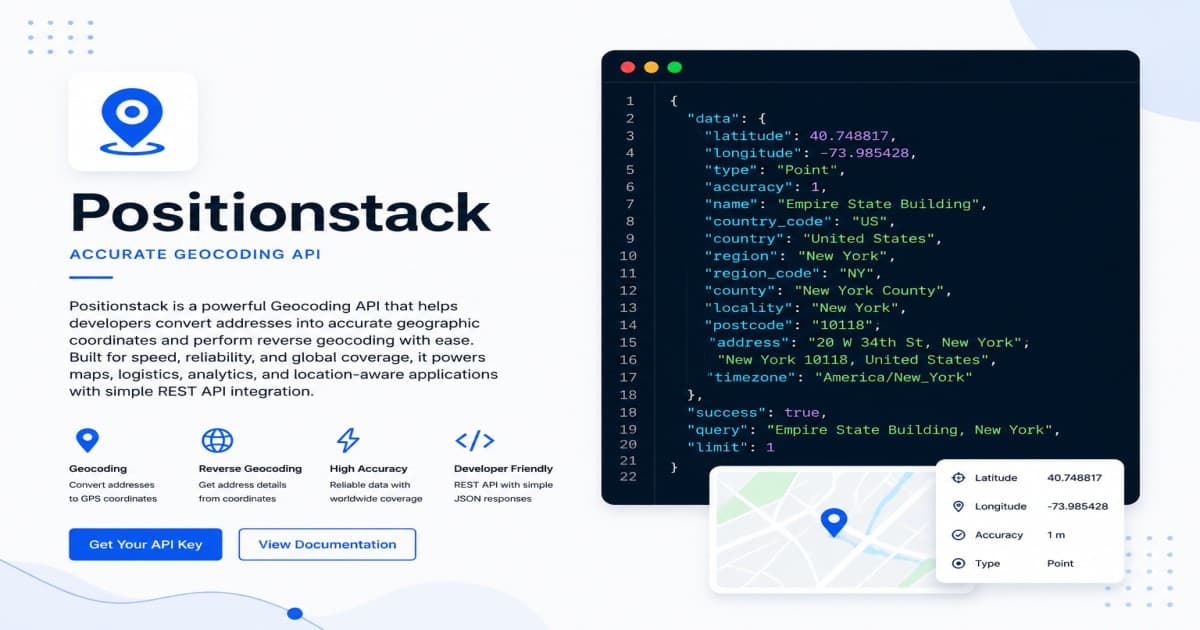
positionstack supports both directions fully, address to coordinates and coordinates to address, with consistent formatting across both.
Final Thoughts
Deciding which direction you need first is usually straightforward based on your initial feature. Planning for the fact that you will likely need the other direction eventually saves a second integration project once a GPS-based feature request inevitably comes in.
Get both directions covered from day one
Forward and reverse geocoding, worldwide, free to start.
Try Positionstack Now:- https://apilayer.com/products/positionstack/
About the Author

Sofia
No bio available